
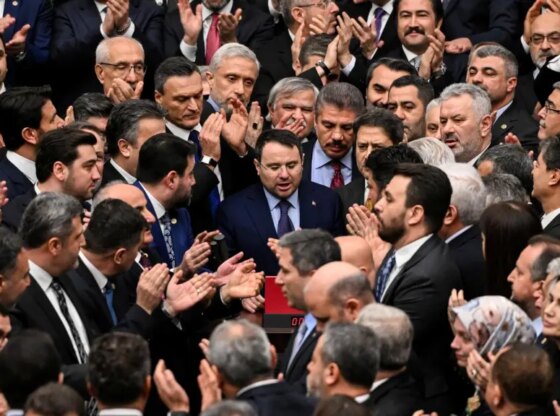

As if he were a militiaman in the pay of Recep Tayyip Erdoganthe deputy of his Justice and Development Party (AKP) Osman Gökçek He was the one who landed the first punch.
It was against Mahmut Tanaldeputy for Sanliurfa of the main opposition party, the Republican People’s Party (CHP), when, like the rest of the members of his party, he tried to prevent the inauguration of the former Istanbul prosecutor, Akin Gürlekas the new Minister of Justice.
Tanal ended up with nosebleeds and was taken to the building’s hospital. They had tried to sabotage the appointment twice when the scuffle broke out, in which another CHP deputy, Servet Mullaogluwas also attacked: he fell to the ground and was kicked numerous times by AKP representatives.
Turkey’s newly appointed Justice Minister Akin Gurlek surrounded by lawmakers from the ruling AKP, protecting him from Protestant deputies from the main opposition party.
Reuters
Another republican, Cem Avsarended with a shoulder dislocation. At the same time, the opposition representative for Hatay, Nermin Yıldırım Kayathrew little books of the Constitution against the tribune.
Those of the opposition CHP were defeated in their attempt to block the appointment of Gürlek, whose signature appears in controversial investigations, in processes initiated against municipalities governed by the CHP, starting with the mayor of Istanbul and the president’s main political rival, Ekrem İmamoğluimprisoned since March and against whom Gürlek requested in November more than 2,300 years in prison.
It was on Wednesday, in the session of the Grand National Assembly of Türkiye (TBMM) where the new Minister of the Interior was also sworn in, Mustafa Ciftcianother member of Erdoğan’s hardliner.
At the end of the plenary session, both ministers left the journalists’ questions unanswered. While Gürlek thanked his colleagues for not “sparing their support” for his investiture.
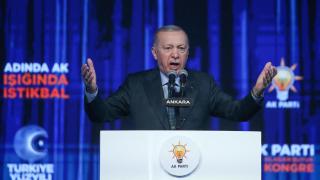
The very macho Erdoğan, in power for more than two decades, responded to the opposition: “To prevent our ministers from being sworn in, they exhibited all kinds of thuggery, including the occupation of the people’s tribune… If you cannot prevent it… You cannot even hope to stop this trend, Free [Özel, líder del CHP]”, who had interpreted the appointment as the “continuation of an attack directed against the CHP”, and a challenge to the Republic and the already diminished Turkish democracy.
For his part, elected mayor İmamoğlu issued a statement from prison: “Our state tradition, our Republic, our democracy and our future are under great threat.”
While the vice president of the CHP, Rose Farmerwrote in X: “The appointment of the chief prosecutor of Istanbul as Minister of Justice is an explicit reward for the operations that, since October 8, 2024, he has undertaken against our party.”
Nail in the coffin
The appointments are not technical, but one more nail in the coffin of Turkish democracy.
Erdoğan began more than a decade ago the shift towards what analysts consider “competitive authoritarianism”, a regime where there are elections and legal opposition, but the Government systematically tilts the playing field through control of the media, justice, electoral administration, police and state resources.
Since the mass Gezi Park protests in 2013, Erdoğan has responded to dissent with police repression, judicialization, and increasing media control.
After the failed coup of July 15, 2016, the state of emergency (2016–2018) made it possible to govern by decree, carry out massive purges (150,000 officials) and reconfigure the bureaucracy, the judiciary and security.
The 2017 referendum consolidated an executive presidency with more levers over the judicial system. Although elections and opposition continue to exist, the terrain is tilted through judicial pressure, state resources, restrictions on protests and information erosion.
With this week’s appointments, the Reis reinforces the authoritarian turn with more control of criminal law and the judiciary as well as public order.
As he emphasizes Murat Yetkinthe Minister of Justice also chairs the Council of Judges and Prosecutors (HSK), which expands his ability to influence appointments, transfers and disciplinary files.
Along the same lines, the judicial journalist Alican Uludag warns of a concentration of authority: from the ability to move heads of prosecutors and judicial staff to control of the penitentiary system via the ministry.
If before the focus was Istanbul, the change allows the pattern to scale to a national level, with investigations, precautionary measures, preventive detentions and disciplinary signals in the judicial career.
Regarding the Interior portfolio, Erdoğan reinforces his strong hand and adjusts the balance with his partner on the nationalist right, the MHP party (Nationalist Movement Party), since Çiftçi is a more radical minister than other members of the AKP capable of muscularizing the police and governors in popular protests, which satisfies the MHP voter.
He timing of the appointments is not coincidental either, it comes before judicial milestones and the political cycle.
In Türkiye, moving Justice and Interior simultaneously is often read as a sign that power wants to align coercion and legality ahead of potentially turbulent months, with protests over sensitive trials.
Within the judiciary, the gesture is read as another twist in the deterioration of defense guarantees in political cases.
Meanwhile, the Government repeats the slogan of “reforms, speed and security.” Gürlek spoke of accelerating processes, reinforcing legal certainty and maintaining firmness against crime efficiently.
According to the commentators of the behind the scenesthe corridors of power, Erdoğan not only publicly charged against the opposition, but he would also be upset with some deputies from his own party for the images and behavior during the incident.
The images have gone around the world, at a time when Ankara is trying to hide its internal excesses with propaganda of its alleged mediation between the United States and Iran, or in Syria.
For the regime’s pamphleteers, the opposition tried to prevent a constitutional procedure and carried out a provocative act that damages the prestige and dignity of the chamber.
On the street and in the Kurdish opposition sectors, it is highlighted that those from the AKP acted as authentic “militias of the Reis”, willing to break their faces to demonstrate loyalty and gain numbers in front of him.
The episode occurs at a delicate moment for the Kurdish cause, with negotiations for the disarmament of the Kurdistan Workers’ Party (PKK) hanging by a thread, and its subjugation in northeastern Syria, while Erdoğan tries to win the support of Kurdish parties, according to critics to reform the Constitution and remain in power again outside legal limits.
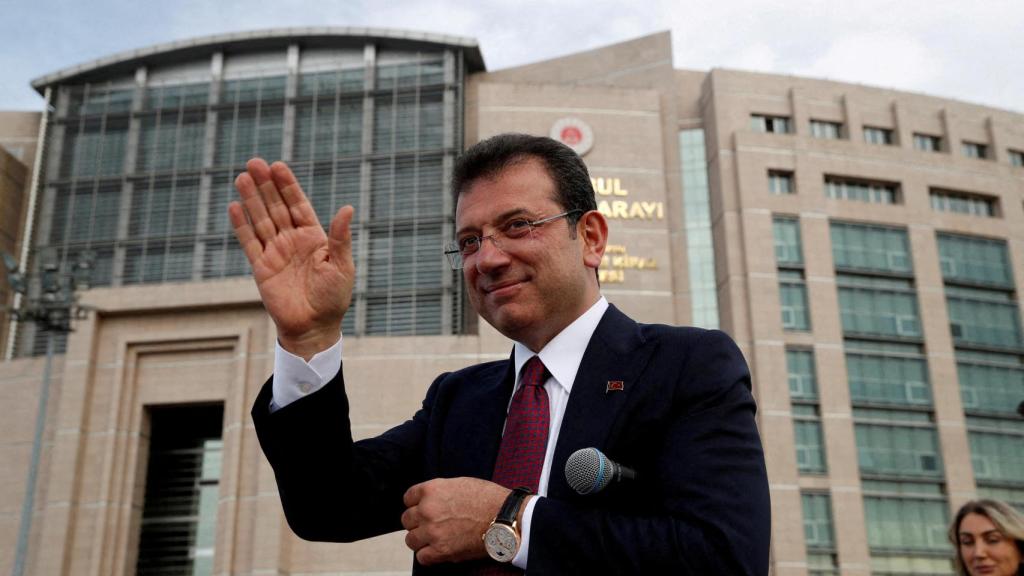
Jailed Istanbul Mayor Ekrem Imamoglu.
Reuters
A long archive of newspapers
It is not the first time that they have fought in the Turkish Parliament.
During Erdogan’s mandate there have been at least six similar episodes since 2016, due to the parliamentary immunity law, in 2017 due to the “presidential” constitutional reform that extended the leader’s legislature, even a female deputy handcuffed herself to the tribune; On two occasions violence broke out in the chamber (2018 and 2024) with the Kurdish representatives; and in 2024 there was blood on the lectern due to disobedience to decisions of the Constitutional Court.
Not all altercations are concentrated in the Erdoğan era.
In the period 1950-70 there were also episodes of parliamentary violence that are remembered as “historical”: in 1958 a fight is cited in the Assembly in which “briefcases and bags were blown up”; On February 19, 1968, during the debate on the budget of the Ministry of the Interior, deputies from the Adalet Partisi pounced on those from the Türkiye İşi Partisi and the writer and deputy Cetin Altan was beaten; and on July 25, 1975, in the climate of a vote of confidence in the Government of Suleyman Demirela day of extreme tension associated with threats and “drawn weapons” in Parliament is recalled.
And while NATO’s main member in the Middle East turns into a dictatorship, Europe looks the other way.