
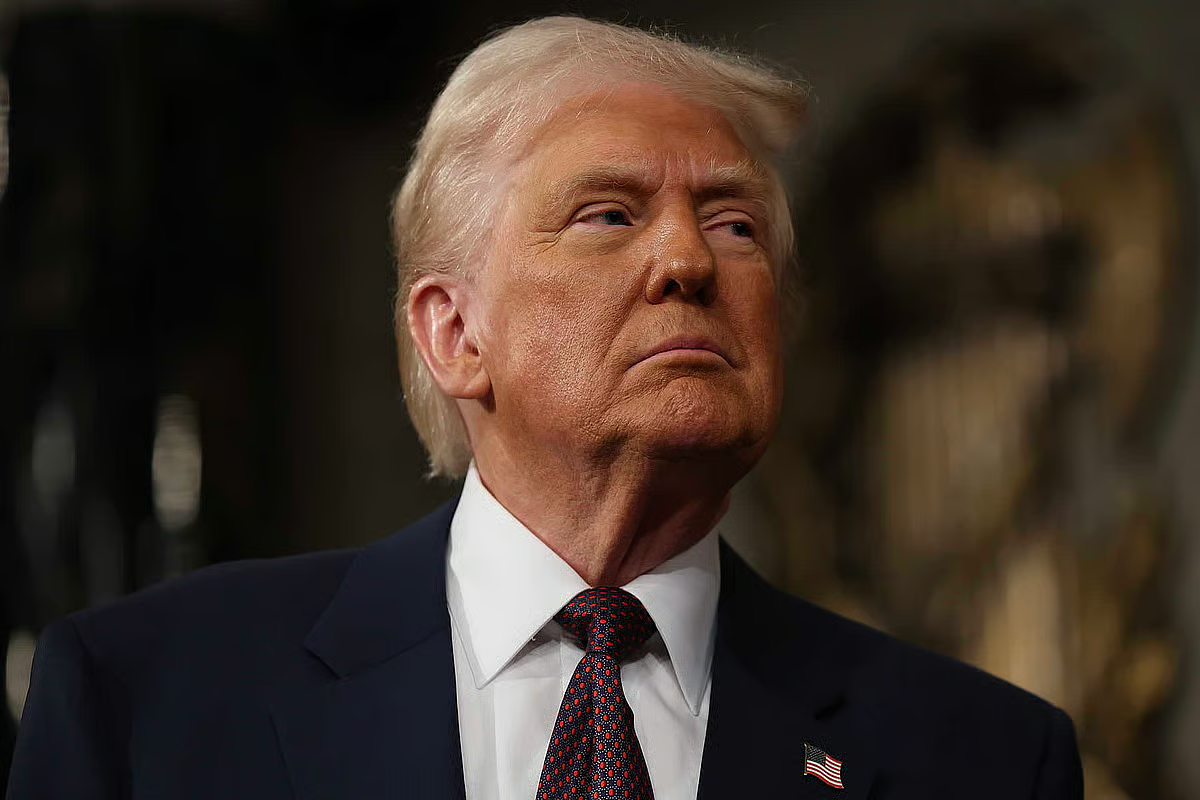

In an executive order, Trump justified the measure based on national security reasons and ordered a total ban on entry into the United States for citizens of Burkina Faso, Laos, Mali, Niger, Sierra Leone, South Sudan and Syria.
The order also prohibits the entry of individuals using travel documents issued or endorsed by the Palestinian Authority.
The Trump administration had previously denied visas to Palestinian officials who were scheduled to attend the UN General Assembly in September.
The president also imposed partial restrictions on citizens of 15 other countries: Angola, Antigua and Barbuda, Benin, Ivory Coast, Dominica, Gabon, Gambia, Malawi, Mauritania, Nigeria, Senegal, Tanzania, Tonga, Zambia and Zimbabwe.
In June, Trump had already issued a total entry ban on citizens of 12 countries that remain on the list: Afghanistan, Myanmar, Chad, Republic of Congo, Equatorial Guinea, Eritrea, Haiti, Iran, Libya, Somalia, Sudan and Yemen.
The partial restrictions previously imposed on Burundi, Cuba, Togo and Venezuela also remain in force.
With this expansion, a total of 19 countries are subject to a total ban on travel to the United States, in addition to the Palestinian National Authority, while another 19 face partial restrictions.
“The restrictions and limitations imposed by this proclamation are, in my opinion, necessary to prevent the entry or admission of foreign citizens about whom the Government of the United States does not have sufficient information to assess the risks they pose to the country”, can be read in Trump’s executive order.
The suspect in shooting at the National Guard, Rahmanullah Lakanwal, a 29-year-old Afghan who arrived in the United States as an asylum seeker in 2021, after cooperating with the CIA in Afghanistan, pleaded not guilty to the charges.