
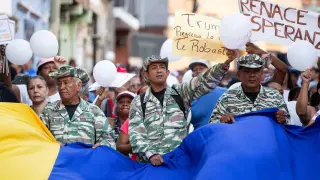

The streets of Venezuelan cities do not have the lighting of other times, when they welcomed the new year with spectacular displays of Christmas lights and colors and decorations more typical of the Latin American idiosyncrasy. Popular markets and some shopping centers are filled with people, but according to a passerby, “what they want is to spend the Christmas bonus before it devalues.”
The threat of the United States Navy is far from the thoughts of Venezuelans while they are shopping for the holidays, but expectation, concern and, in some cases, hope hang in the air.
So far, news of the three oil tankers seized by the United States – the latest, the Bella 1, with an extensive history of trips to Iran – has caused citizens of the Latin American country to seek to refill their gasoline tanks in the face of a possible shortage.
Donald Trump He has commented that the oil will be retained in his territory: “Maybe we will sell it, maybe we will keep it, maybe it will be used for our strategic reserves and maybe we will also keep the ships,” he declared.
Added to the strategy of bombing boats in the Caribbean and the Pacific, with a death toll of at least 105 without confirming that they are alleged drug traffickers, the unilateral closure of Venezuelan airspace and the economic sanctions and confiscations against members of the Chavista leadership, the United States seeks to suffocate the Venezuelan regime. Nicolas Maduro without the military of both countries coming into contact.
Trump took a step further in this direction last Wednesday, when he ordered the first ground operation in Venezuela since the anti-drug campaign in the Caribbean began in September. The drone attack, carried out by the CIA, according to the North American press, hit a “large port facility” from which, according to the White House version, ships loaded with drugs were leaving for the United States.
A future war?
Trump has assured that he “does not rule out” the possibility of going to war, without specifying its final objective. He has only assured that Maduro “knows exactly” what his counterpart in Washington wants.
A retired general of the Venezuelan Armed Forces, who declares on condition of anonymity, points out that “as far as the military part is concerned, the United States is looking for the regime to make a mistake that gives it the green light to act forcefully.”
“The Armed Forces are not in a position to face any armed conflict because they are not trained, they are not militarily indoctrinated, resources and logistics are at rock bottom, and the levels of dismissal requests from middle and lower management are very high,” he explains.
The source also highlights the “discontent over low salaries and the disregard for recognition of merit at work” that has been “replaced by loyalty” to Maduro. They have also weighed “the terror campaigns that are instilled in active cadres with what represents betrayal, continuous threats and surveillance.”
The deficiencies in Venezuela’s arsenal and military personnel are well known, which is why Maduro has dedicated months to deploying the Bolivarian militias, paramilitary bodies of followers of the Chavista Government, although there have been cases of forced recruitment, including of minors and those over 65 years of age.
With this, there are 200,000 troops mobilized between military and civilians, according to the Venezuelan Minister of Defense, Vladimir Padrino López. “But the militias are not actually those we see in advertising, poorly dressed men and women of advanced age, but also the armed groups, indoctrinated and compacted civilians, trained in Cuba and Venezuela by the [grupo paramilitar cubano-venezolano] Francisco Miranda Front”, says Juan José Monsantinternational law lawyer with a long career in security and defense.
To these bodies must be added “the different criminal ‘trains’ existing in the country, dangerous criminals who agreed with the Government, plus others who were sent abroad, to those countries contrary to the Venezuelan model, such as the well-known Aragua Train,” adds the specialist.
Even so, several of the sources consulted They rule out a landing of North American troops in Venezuelan territory in the near future, listing as reasons the difficulty of geographical conditions, the cost of reputation in the international community and the possible loss of American lives.
Given these concerns, the general considers that “an extraction command-type action could be carried out that necessarily involves hand-to-hand combat, for which the use of mercenary contractors must surely be considered to avoid military casualties.” The biggest question remains when, if it happens.
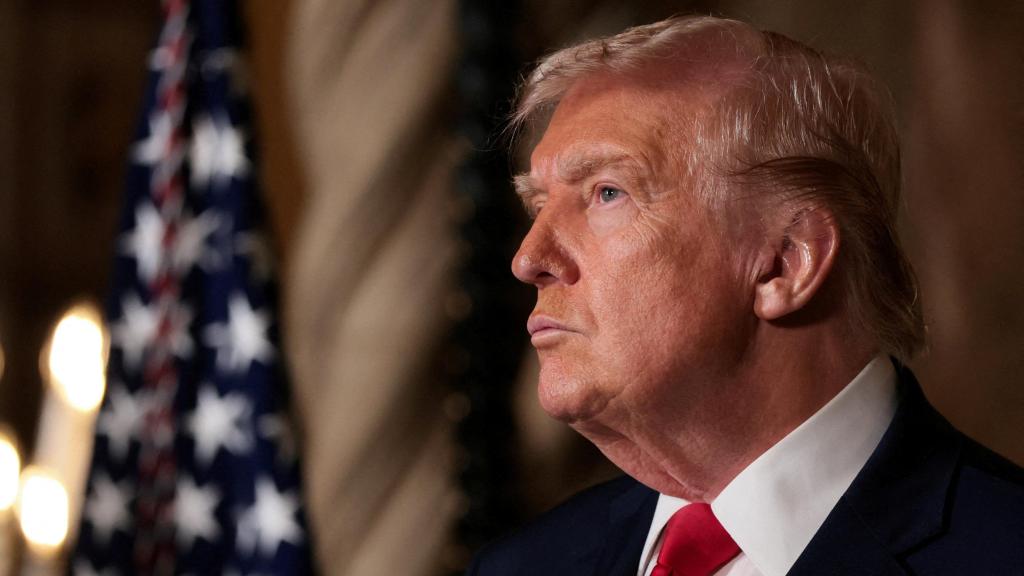
Donald Trump, last Monday at his Mar-a-Lago resort.
International support
The political pulse between the two countries seems to oscillate between stalemates, in which Trump applies pressure in areas far from the Miraflores presidential palace, as well as drastic and sudden escalations, with the Chavista regime having no way to respond beyond calling for increasingly less crowded marches.
The Deputy Under-Secretary-General of the United Nations for Political and Peacebuilding Affairs, Khaled Khiaripointed out that the UN High Commissioner for Human Rights had considered the air attacks against the vessels of alleged drug traffickers contrary to international law.
“The fight against drug trafficking must be approached as a matter of law enforcement and not through the lethal use of force,” Khiari stressed.
There are few nations that continue to support Maduro apparently unconditionally. Even Gustavo Petropresident of Colombia and one of the last defenders of the Venezuelan president in the region, agreed to call him a “dictator.”
At a recent UN session, the only ambassadors who spoke out strongly in favor of the Chavista government’s position were those of Russia and China, who respectively described the United States operations as “‘pseudo-legal’ methods that disguise what is actually state piracy” and “acts of unilateralism and intimidation.”
clandestine forces
All this in terms of public and visible actions, because, on the ground, Venezuela has “Russian and Cuban operators, easily located in the military circle hotel and its facilities, especially the sports fields and in military hospitals,” according to military sources consulted by EL ESPAÑOL, although “They have shown that Russia will not get involved militarily”.
Numerous NGO reports describe their roles in training soldiers and torturing dissidents. In the case of Cubans, “they are the most interested in maintaining the the state in whichsince they have a lot to lose; They are the ones who maintain that the Government must remain in power, which prevents a negotiated solution,” those same sources add.
They have also described China’s role in the surveillance and military intelligence infrastructure in the country, but point out that “what interests them is that they pay the 80,000 million dollars that Venezuela owes them. An organized government, a serious government, can in the future begin to pay them what they owe them in any way.”
Aluden así al posible gobierno de los líderes opositores María Corina Machado, galardonada recientemente con el premio Nobel de la Paz, y Edmundo González Urrutia, aparente ganador de las elecciones presidenciales y exiliado en Madrid.
También se deben tomar en cuenta las guerrillas colombianas como el Ejército de Liberación Nacional (ELN) y las disidencias de las extintas FARC, cuya presencia en Venezuela ha consentido el chavismo desde su llegada al poder.
“Muchos actúan junto a autoridades locales y podrían actuar para resistir y causar daño al nuevo gobierno”, según el general, aunque otro entrevistado afirma que “muchos de esos guerrilleros han regresado a Colombia para no enfrentarse a los Estados Unidos”.
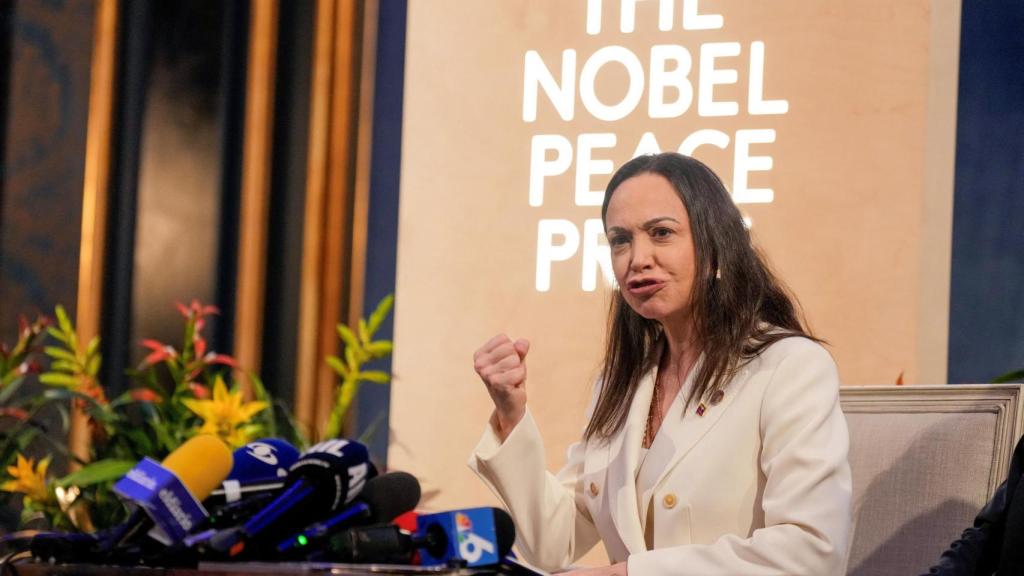
La líder opositora de Venezuela María Corina Machado en una rueda de prensa el pasado 11 de diciembre en Oslo tras recibir el Nobel de la paz.
Reuters
Según Monsant, “la tarea más delicada es lidiar con los terroristas del Medio Oriente instalados y dispersos en Venezuela, mimetizados con los criollos, desde el mismo inicio de la era [del expresidente fallecido] Hugo Chavez“, highlighting the presence of the Hamas and Hezbollah groups in the country’s territory.
But the United States also has clandestine elements in Venezuela, even before Trump’s announcement about CIA operations, agree those interviewed, who describe this statement as an unorthodox, untactical, but perhaps effective act of intimidation.
The price of withdrawal
Another possibility for the Trump Administration is that actions in the Caribbean become a lower priority. The general interviewed describes the consequences of abandoning the conflict, both national and international, as “dire.” “The upcoming local elections are a litmus test of pressure on Trump to resolve this situation quickly,” he says.
The source close to aviation does not consider the possibility of the North American Navy abandoning the Caribbean, because “backing down would show that the United States is weak and Trump, who is an egomaniac and a narcissist, does not dare to abandon the fight at this time.” In his words: “Trump is against the wall, not just Maduro.”
Faced with the perception of Trump’s lack of initiative in the face of the Russian invasion of Ukraine and the Israeli offensive in Gaza that many analysts diagnose, Venezuela seems the perfect opportunity for the American president to reclaim his strongman brand.
Meanwhile, Venezuelans add the possible start of a military conflict to concerns about huge inflation, political repression that makes the right to protest impossible, and a crumbling health infrastructure and basic services.