

Not infrequently, the maison Krug partners with musicians who compose specific works for each Grande Cuvée, because the brand believes that its wines are, due to their specificities, a symphony. The experience of listening to the music composed for a particular edition of Krug is, in fact, very curious.
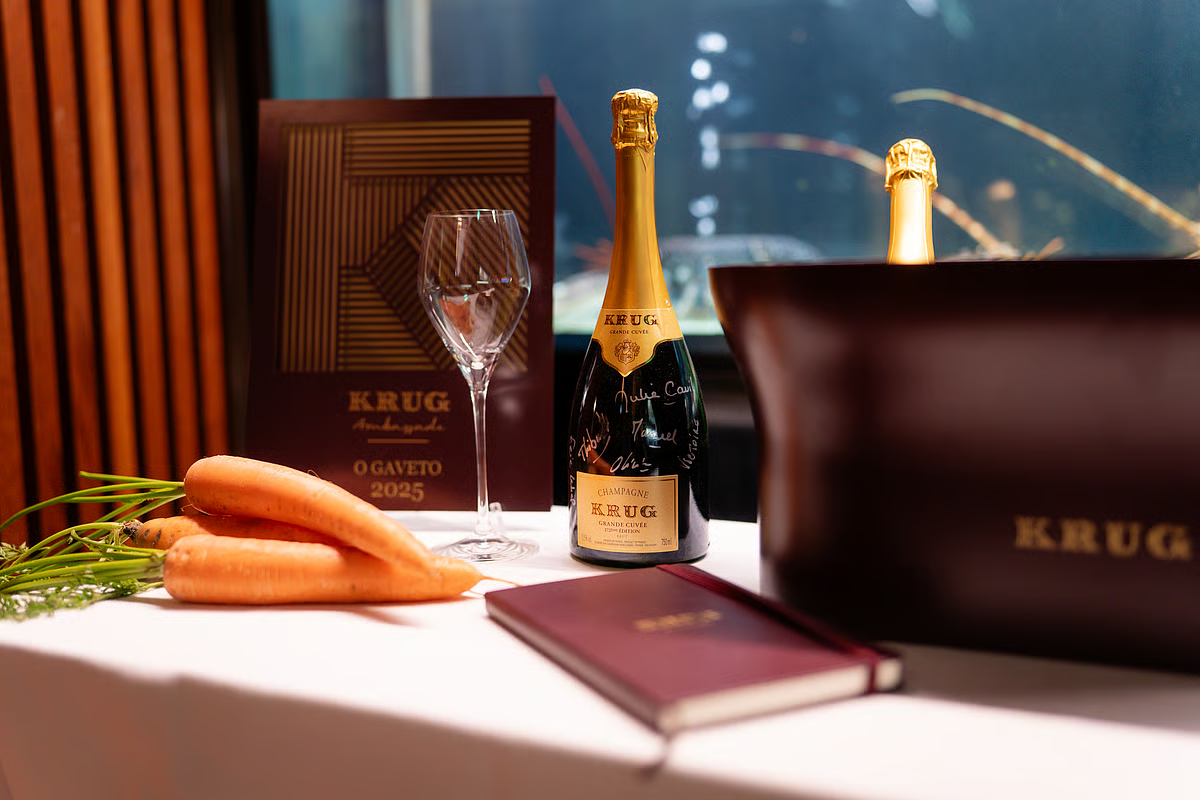
At a dinner that was designed around the carrot – Krug holds, in the various markets in which it is present, an annual event called ‘Krug in the Kitchen’, in which it challenges the cooks at its embassies (Gaveto, in this case) to create a menu around a unique ingredient, to pair with its wines – several references were sampled.
In addition to the two new wines – which accompanied the Amuse-Bôuche (Grande Cuvée) and the beef tenderloin with micro-carrots (Rosé), Krug also brought the Grande Cuvée 163éme and 170éme editions to the table. They all behaved impeccably with the dishes designed by the O Gaveto team, but the big star of the night ended up being a Krug 2011. In a year that was particularly difficult for the Champagne region, mainly due to climate issues, the Krug 2011 appears as a kind of proof that when you have the best people making wine, anything is possible: 3-liter bottles (jeroboam) that were opened, which promote a less accelerated and calmer aging, in simple terms, revealed an extremely aromatic wine, with a deeply elegant complexity, and with aromas of brioche, dried flowers and a particular smoky note at the end. It was, precisely because it accompanied the dessert, the real icing on the cake.
According to the rules, wines made in Champagne can only use seven grape varieties: Chardonnay, Pinot Noir and Pinot Meunier (the three most used and which occupy around 99% of the region’s planted area), Pinot Blanc, Pinot Gris, Petit Meslier and Arbane. This means that the region’s winemakers have less room for maneuver when conditions in a particular year are not the best, to achieve top results. And, if on the one hand, the option of using several harvests for a single reference tries to mitigate these potential disadvantages, the truth is that it also creates other challenges: often, the winemakers who are making this year’s wines had nothing to say when harvesting the wines they are going to use. For Jêrome, this game is part of the charm of Krug which, he believes, will continue to guarantee its top place among the best champagnes in the world.