

Pakistan has attacked Taliban targets in major Afghan cities, including Kabuland the Pakistani defense minister has described the situation as an “open war.”
Jumping increases the risk of long crisis and regional expansion and returns to the scene the mediators who already opened a channel in 2025, Türkiye and Qatar. The question is whether they will be able to stop the escalation or whether the effort will remain mere gestures for internal consumption.
Ankara and Doha are trying to break the spiral and reactivate an already tried diplomatic format. In October 2025, the Qataris and Turks mediated to consolidate a ceasefire through a monitoring and verification mechanism, with penalties for violators.
This Friday, the Turkish Foreign Minister, Hakan Fidanspoke by phone with his counterparts from Pakistan, Afghanistan, Qatar and Saudi Arabia —Ishaq Dar, Amir Khan Muttaqi, Mohammed bin Abdulrahman Al Thani y Faisal bin Farhan— to deactivate combat.
The Taliban has asked Qatar to redouble mediation efforts, and Türkiye then activated regional calls. The pattern fits with what was agreed in October: Doha provides an acceptable channel for the Emirate, and Ankara provides headquarters and direct access to Islamabad.
The objective is twofold: to reopen negotiations before the exchange of blows becomes a point of no return and to recover, even on paper, the logic of verification and penalties that deters a relapse after the truce.
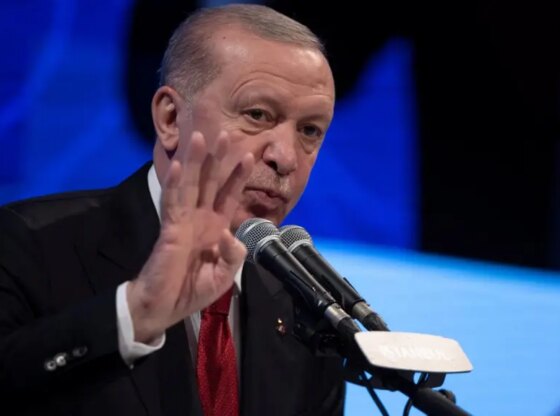
Erdogan intervenes from Bosphorus University.
Reuters
The motivations of the Turkish president Recep Tayyip Erdogan They are multiple. “First of all, Turkey perceives both countries as sister nations. Therefore, any conflict goes totally against both Turkish sensitivities and its interests,” he explains in conversation with this newspaper. Murat Aslanprofessor at Hasan Kalyoncu University and senior researcher at the think tank Turkish SILK.
“The second question has to do with the realpolitik“continues the expert. “A probable escalation in Afghanistan will affect Pakistan’s cohesion. It may also influence the current situation in Iran, both positively and negatively, because another conflict in the region could fuel an escalation that, in the future, no one will be able to control.”
Aslan adds an additional risk factor: “I think India could get involved.” And he explains Ankara’s material interest: “Türkiye sees this region as a market and as a transit route.”
Aslan also highlights the danger of regional chaining. “The United States will most likely intervene in Iran; maybe today, maybe tomorrow, I don’t know, but any crisis on the ground will amplify a truly regional escalation, within the framework of competition.”
In this scenario, “strategic voids will open” that “could be occupied by China or India.” Hence his conclusion: “For this reason, the Turkish position is in favor of facilitating and mediating, if both parties agree to it. At the same time, it is not going to be easy, because we know that the leader of the Taliban has been assassinated, so it will be difficult to calm the Taliban cadres.”
Added to this logic is a political calculation: Ankara seeks to capitalize on its privileged relationship with Pakistan – defense, cooperation and political affinities – without completely losing access to the Taliban government, managed pragmatically since its return to power in 2021.
The objective is to be essential in the file and, at a minimum, sit at the table with other possible mediators. In a conflict where Russia, China, Saudi Arabia, Iran or the UN also exert pressure, competition for who counts is part of the game: for Ankara, being left out is equivalent to losing influence and credibility as a diplomatic power.
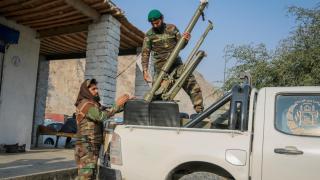
Among the mediators, Turkey, Qatar and Saudi Arabia have continued to channel humanitarian aid to Afghanistan since 2021, usually through their official agencies, NGOs and humanitarian entities, so they have room to maneuver to influence Kabul.
Saudi Arabia acts as a complementary facilitator and bridge with Islamabad: that is why Turkey included this Friday the Saudi Foreign Minister, Faisal bin Farhan, in its round of calls to coordinate the de-escalation.
In addition, Riyadh already promoted rounds of talks between Afghan and Pakistani representatives after the 2025 ceasefire, in a Saudi initiative that sought to sustain the truce, although without reaching a broader agreement.
The immediate fuel for the crash is the security dimension. In recent months, Pakistan has seen an increase in attacks and violent incidents, many attributed to the Tehrik-e Taliban Pakistan (TTP).
Islamabad accuses this group of operating from the Islamic Emirate of Afghanistan, something Kabul denies. That dispute is one of the engines that turns any ceasefire into a precarious truce.
There is also a reputational incentive. Erdoğan wants to reinforce his role as an operational mediator, and Qatar its profile as an indispensable facilitator.
The mediator needs to show results, but the nature of the conflict pushes for modest results: if being in the photo trumps compliance, the risk is presenting as peace what, at best, may only be a pause.
The limits of Turkish-Qatari mediation point to the same conclusion: the problem is not only the current escalation, but the structure of the relationship between Islamabad and the Emirate since the return of the Taliban to power.
The political scientist Jennifer Brick Murtazashvilifrom the University of Pittsburgh, puts it this way: “Neither party had an honest conversation about what the relationship would really be like. This structural misunderstanding is the seed of everything that’s happening.”
The consequence is that each border clash reopens the dispute because there is no common framework on responsibilities, attribution of attacks or acceptable limits.
The current crisis is a “leap into unknown territory,” warns Abdul Kabula militancy and extremism specialist with Singapore’s RSIS. “What we are witnessing is a recipe for instability. And terrorist groups will gain strength by taking advantage of the chaos.”
His warning points to a classic trap: the more the border becomes militarized, the more incentives armed non-state actors have to exploit the confusion and turn escalation into an opportunity.
Furthermore, there is a risk of proxy violence into Pakistan. “Either the Taliban are stepping back from the brink, or they are stepping forward and increasing support for the TTP and other groups operating inside Pakistan,” he said. Avinash Paliwalfrom the SOAS in London.
For Ankara and Doha, this dynamic would be a limit: even with a border ceasefire, tensions can materialize in the form of attacks and group operations proxy or interposed, and the mediator loses leverage because the battlefield moves inward.
In this framework, the plausible success for Ankara would be tactical: achieving a short de-escalation and resuming talks, with minimum guarantees to avoid immediate clashes.
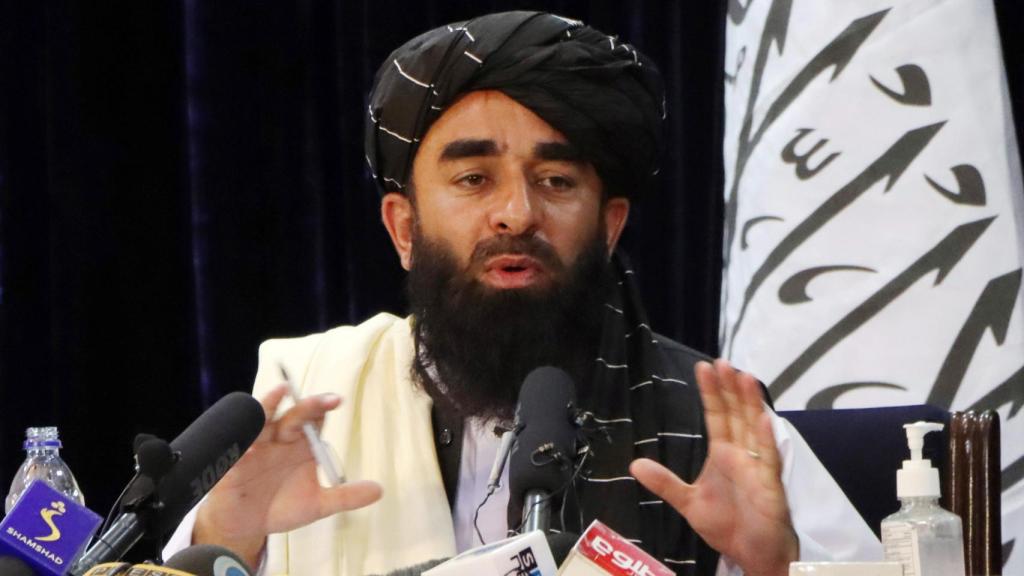
Taliban spokesman Zabihullah Mujahid at a press conference.
Taliban spokesman Zabihullah Mujahid has said that they want to “resolve this problem through dialogue,” language that points more to a ceasefire than a structural agreement.
Failure, on the other hand, would be strategic: that mediation does not stop the logic of retaliation and delegation of violence, and that the conflict becomes a lasting crisis.
Ankara has demonstrated effectiveness in technical and verifiable mediations, such as the Black Sea Grain Initiative between Ukraine and Russia, with quantifiable corridors and operational mechanisms, and also in prisoner swaps.
That experience suggests that, if a concrete compliance mechanism is in place, Türkiye can deliver. But it also teaches the limit: when the incentives of one of the parties change, the mediator lacks coercion to sustain the agreement.
The crucial difference here is that the conflict is not technical, but political and military, with proxiesdisputed border sovereignty and attribution problems.
In Libya, Turkish intervention saved Tripoli, although precisely because it was an actor its role was more like sponsorship than neutral arbitration.
In Syria, the Astana Process functioned more as management and partial freezing than as a guarantee of peace.
In conflicts of this type, mediation tends to remain in temporary management if there is no credible verification and clear costs for non-compliance.
In Gaza, he managed to mediate on very specific technical issues due to his access to Hamas.
In the background weighs the Durand Line, the 2,600 km de facto border drawn in 1893 by British India and the Afghan emirate. For Pakistan it is an inherited international border; For large sectors of Afghanistan, a colonial imposition.
This symbolic component is mixed with the military component when the crisis stops being an incident and becomes a campaign, and complicates any negotiation.
In short, Ankara and Doha have reasonable options to contain the fire in the short term because both parties have already accepted the channel and because sitting down to talk is usually easier than resolving.
But the chances of a sustainable agreement are low as long as the conflict continues to revolve around cross-border militancy, border sovereignty and retaliation, without a verification regime to attribute violations and sanction non-compliance.