
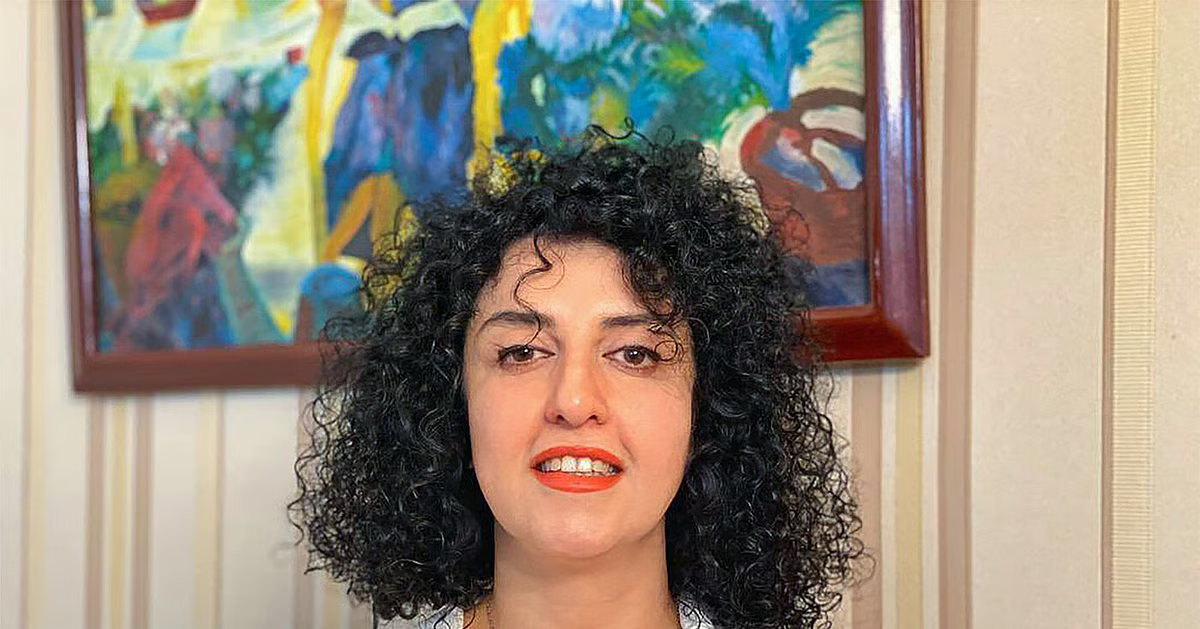

The detention has already been condemned internationally. Iranian Nobel Laureate Shirin Ebadi valued the response of “people whose voices resonate for freedom ever louder, more eloquent and with more hope every day”.
In the same vein, the Norwegian Nobel Committee, political prisoner Ahmad Reza Haeri and the heir to the Iranian throne, Reza Pahlavi, criticized the arrests.
The recently awarded Venezuelan Nobel Peace Prize winner María Corina Machado also condemned the detention.
“[Narges] she was detained for her courage, for refusing to accept humiliation and for defending the dignity of women and the basic rights of all human beings,” said Machado.
Therefore, he called for a “long march towards freedom, not only Venezuelan, but also Iranian, universal” and denounced the “authoritarianisms that survive in the shadows while the world considers repression an internal issue”.
The US State Department also criticized the Tehran regime for “instead of clarifying and responding to the causes of the death of this courageous lawyer, treating the participants in the ceremony with violence and repression”.
Mohammadi, 53, was provisionally released in December 2024, following a request for medical reasons approved by the Tehran prosecutor’s office.
Months earlier, in October, she was hospitalized after her family reported that authorities had been preventing her from receiving treatment for more than two months, despite her deteriorating health condition.
Since she was temporarily released, her close circle warned that the activist was at risk of being sent to prison again.
Mohammadi, who spent most of the last 20 years of her life behind bars, suffered several heart attacks and underwent emergency surgery in 2022.
Convicted five times, she received a total sentence of 31 years in prison, mainly for her role in protests against the strict dress code for women in Iran.
The activist has repeatedly demonstrated her support for anti-government protests over the death of Mahsa Amini, after being detained for not wearing the ‘hijab’ (Islamic veil).
Throughout her life, Mohammadi founded associations in defense of women’s rights and wrote books and articles to denounce the abuses to which they are subjected by security forces and authorities, particularly in the country’s prisons.