
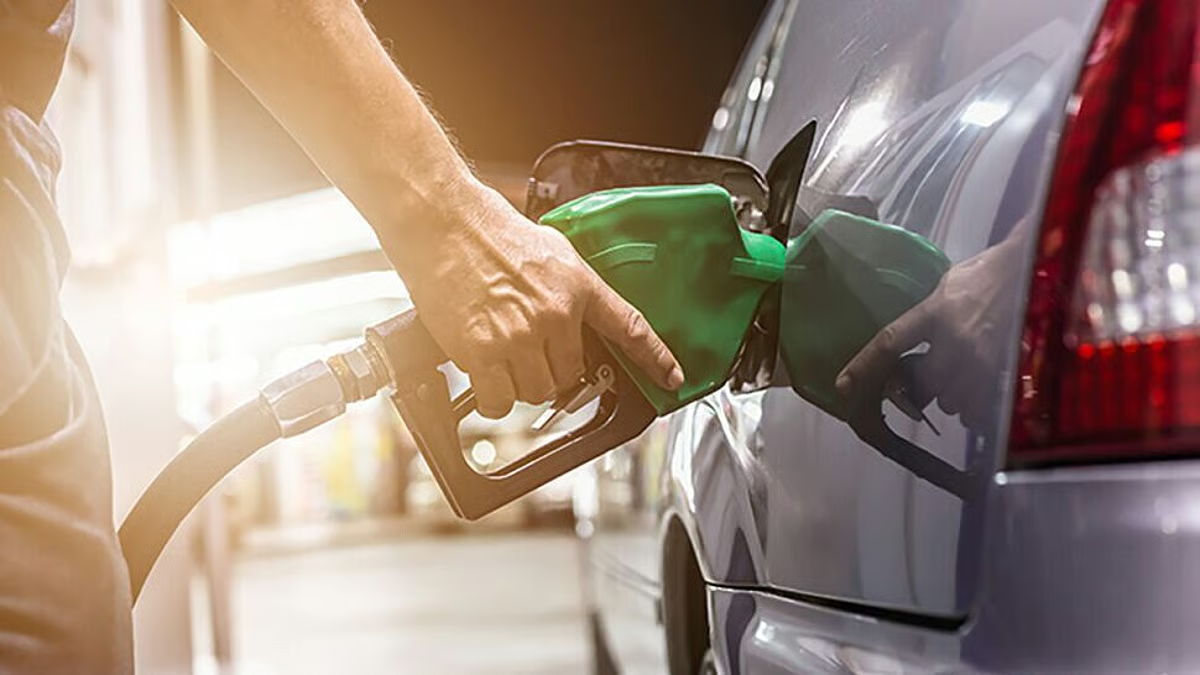

The Government said this Friday, December 12, that it will continue to reduce the discount on the Tax on Petroleum and Energy Products (ISP), as requested by Brussels, in new cuts in fuel prices, as it did two weeks ago.
“We have to reverse the discount and we already started it two weeks ago. We will use the same methodology as two weeks ago: whenever there are price drops that allow us to accommodate part of the reversal of the discount, it will be done”, said Finance Minister, Joaquim Miranda Sarmento, in statements in Brussels at the end of the meeting of European Union Finance Ministers.
Asked when this will happen, the government official pointed out that it was “impossible to say”. “If I could predict the price of oil in six months or a year, I would be a trillionaire at the level of Mr. Elon Musk, but unfortunately I don’t have that ability”, he joked.
At issue are the European Commission’s regular requests to Portugal to end the discount on the Tax on Petroleum and Energy Products (ISP) that was created in 2022 and 2023 following the energy crisis related to the war in Ukraine and high inflation.
According to the Government, the European Commission has not imposed any date, so this reduction will be gradual.
At the end of November, the Government reduced the current discount on the ISP applicable to unleaded gasoline and road diesel, canceling part of the drop in fuel prices expected for the following week.
Even today, the Minister of Finance was asked about the Single Circulation Tax (IUC), indicating that he had presented “a tax simplification agenda at the beginning of this year”, so now there will be “a change only in the form of payment”.
“The tax will maintain exactly the same value. In fact, the tax has not been increased even by the inflation rate for two years, either in the budget for 2024 or in the budget for 2025”, he pointed out.
Thus, the change aims only to “simplify”, now defining that the IUC has “a single payment in April, if the amount is up to 100 euros, two payments in April and October if it is between 100 euros and 500 euros and three annual payments if it is more than 500 euros”.