
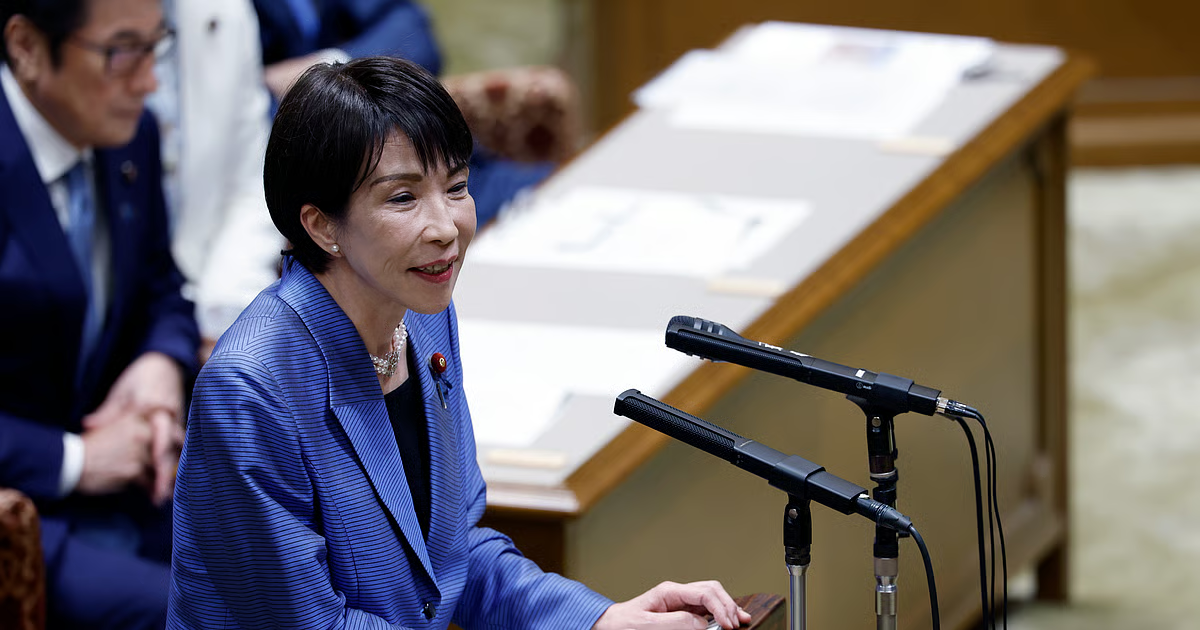

The Japanese government approved this Friday, the 26th, a record budget for the next fiscal year, aimed at financing increases in defense and social security spending, when persistent inflation continues to weigh on consumption.
The budget of 122.3 billion yen (around 665 billion euros) for the fiscal year that will begin on April 1, 2026 provides around 9 billion yen (49 billion euros) for defense, with which Prime Minister Sanae Takaichi intends to accelerate the country’s military modernization in the context of the country’s deteriorating relations with China.
The Ministry of Defense estimated in a presentation document that “Japan faces the most serious and complex security environment since the end of the war”, highlighting the need to “fundamentally strengthen” defense capabilities.
The budget includes 100 billion yen (542 million euros) for the coastal system called “SHIELD”, designed to mobilize drones in the face of a possible invasion by foreign troops.
Japan expects SHIELD to be completed by March 2028, without specifying, for now, the part of the coast that will be covered.
This budget of 122.3 billion yen exceeds the 115 billion (624.6 billion euros) requested for the current year.
Markets are concerned about the impact of spending planned by the Takaichi Government on Japan’s public debt, which is expected to exceed 232% of GDP in 2025, according to the International Monetary Fund (IMF).
In early December, Parliament approved a major supplementary budget to finance a recovery plan worth more than 100 billion euros, which caused the yen to fall and the yield on Japanese state bonds to soar.
Takaichi advocates these significant public expenditures to stimulate economic growth.
“What Japan needs today is not to weaken our national strength with excessive austerity policies, but to reinforce it with proactive fiscal policies,” said the official at a press conference last week.
In an interview last Tuesday with the economic newspaper Nikkei, the leader of the Japanese Government reaffirmed her commitment to the country’s financial health, rejecting any “irresponsible issuance of bonds or tax cuts”.
The current size of the budget should not surprise the bond market, estimated Takahide Kiuchi, economist at research institute Nomura, cited by AFP.
But too significant an increase “would worsen the turmoil in the bond market, already in crisis.” If the fall of the yen and the price of debt accelerates, as a result of this budget, it will “accentuate concerns about the negative effects on the economy and the lives of the Japanese”, added the analyst.
A weak yen increases the cost of imports to Japan, which the country depends on for food, energy and raw materials.
The budget project will still have to be approved by Parliament.