

It is the eighth day of celebrations. The Ayatollahs’ regime commemorates the 47th anniversary of the Islamic Revolution. The atmosphere in the city is not festive: a month after the riots, pain, anger and hopelessness are reflected in the people’s faces.
It is easy to find photos or posters of those who disappeared during the repression of the revolt on the street. Most of them are young faces“Who hasn’t lost a family member or a friend?” declares a 24-year-old student to the BBC, one of the few Western media outlets that have returned to the country after the revolt. “Maybe a neighbor, or the neighborhood baker… This regime has to fall,” he adds.
Official figures recognize more than 3,000 deaths during the 15 days that the riots lasted. Other sources speak of higher figures, although it is difficult to verify the veracity of the information that reached the West. What is easy to recognize is that this revolt and, above all, the cruelty with which it has been put down, represent a before and after in the memory of the Persian people.
Meanwhile, representatives of the United States and the Islamic Republic of Iran meet in Geneva trying to reach a nuclear control agreement. The content should be technical: the Americans intend to limit Iranian military capacity in a context of high tension in the region in which Israel has a lot to say, but the political impact is undeniable.
President Trump’s top-trading style has become customary. To reinforce his arguments, he has sent to the Persian Gulf area the Shock Group No. 3 of the nuclear aircraft carrier USS Abraham Lincoln. The Iranians have responded by deploying a blockade fleet in the Strait of Hormuz.
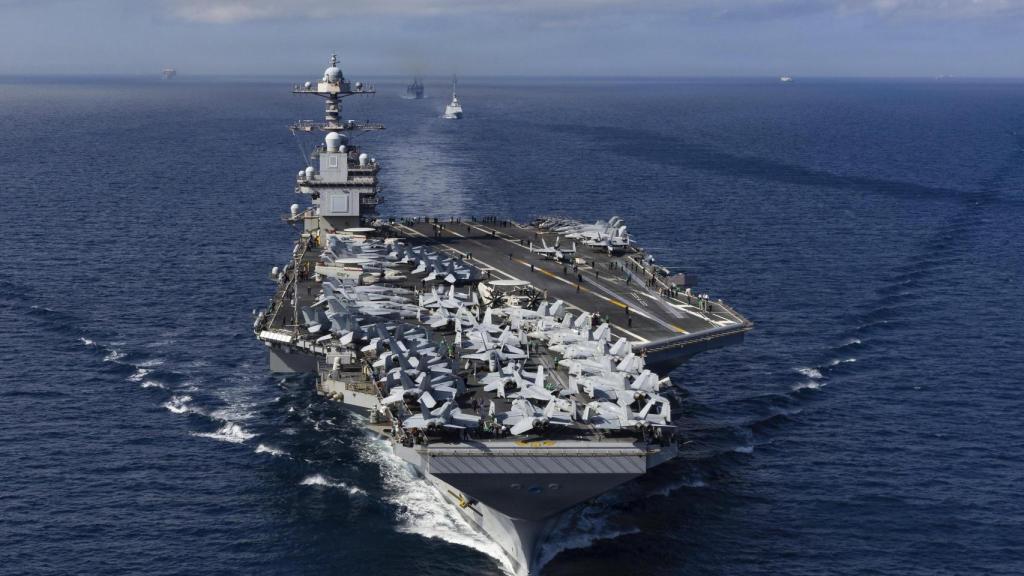
The aircraft carrier USS Gerald R. Ford in Mediterranean waters.
Europa Press.
As if that were not enough, the United States Navy has ordered the group commanded by the USS Gerald R. Ford heading to the region. It is the most modern and powerful aircraft carrier in the entire fleet. When joined with the already prominent means, the destructive power available will be enormous.
In the midst of such a warlike deployment, the second round of nuclear talks seems to be taking its first steps. They are timid, yet promising, and both delegations recognize that progress has been made.
The Iranian people are expectant, although the news they receive is not free of the patriotic and anti-Western bias imposed by the regime. However, a good result could alleviate the situation of the population.
It seems clear that the internal climate of the Persian country plays in favor of the Trump Administration’s position. The internal crisis is not political, it is humanitarian, and the West can loosen the noose that is suffocating the ayatollah regime and, above all, the Iranians.
The origin of the protests
International sanctions have dragged the country into an unsustainable situation. In a short time, the local currency has been devalued by half, but the domestic economy is the one that has been most affected: according to the organization Funds for ONG80% of Iranian families are below the poverty level.
The average salary does not reach 40 dollars monthly and inflation has skyrocketed in the months leading up to the revolt. The price of basic foodstuffs has risen 60% since last summer and some products, such as meat, have become a luxury that few families can afford. The shortage has emptied supermarket shelves and many stalls in the Tehran bazaar have had to close.
Timeline of the riots
On December 28, merchants decided to take to the streets to protest the terrible economic situation. The next day, Mohammad Reza Farzindirector of the Iranian Central Bank, resigned.
It was a subtle gesture of recognition by the Government of Tehran to silence the protests, but it was not enough. On the 30th, the demonstrations spread throughout the country and reached the universities.
The president Masud Pezeshkian He met that day with a representation of the businessmen to listen to their demands. “We will spare no effort to resolve the problems,” he promised.
But his commitment did not stop the unrest: on the 31st, the protests in Fasa, in the south of the country, reached unusual violence and the protesters attacked the governor’s headquarters, injuring several police officers.
On the first day of the year 2026, the revolt spread throughout the country and the first deaths were officially recognized. That day alone, authorities reported seven victims, some of them among the Revolutionary Guard.
On January 2, President Trump denounced on his social network that Iran “kills peaceful protesters” and threatened the regime to intervene in support of the protests. His statements stirred up the hornet’s nest and the revolt spread to more than 100 towns.
On the 3rd, Iranian Supreme Leader Ali Khamenei publicly announced that the “rioters will be put in their place” and described those killed in the riots as “terrorists.” Some sources indicated that it was then that the Iranian Government gave the order to shoot down the protesters.
The climax was reached a few days later, when the crown prince to the throne, Reza Pahlavi, made a call from exile to take to the streets to overthrow the ayatollah regime. The response was massive and European intelligence sources reported that even nine million citizens demonstrated against the Government.
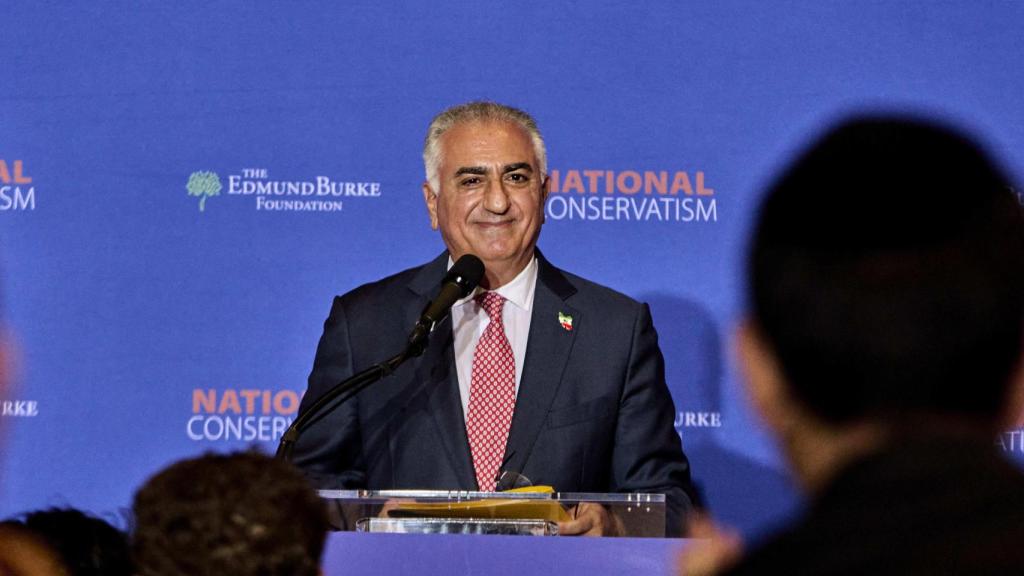
The heir to the Iranian throne, Reza Phalavi.
Europa Press.
On day 9, access to internet crashed. Iran was isolated. Visas for foreign journalists were revoked and the world was left blind and deaf to what was happening in the country. Only a few fragments of information escaped through clandestine channels.
Finally, on January 21, Mohammad Movahedi AzadAttorney General, declared to the official agency Libra News: “The insurrection has ended.” He thanked the population for “extinguishing” the uprising and noted that the protests had been quelled after severe repression.
That same day, the Supreme National Security Council informed parliament that the revolt was quelled and that the number of victims amounted to 3,117although unofficial sources indicated tens of thousands of deaths and arrests.
There is no doubt about the violence used by the Revolutionary Guard in the repression of protests. The British media The Guardian published an exclusive report this Tuesday showing the x-rays performed at a hospital on victims of the riots.
In them we can see “a recurring pattern according to which the shots were directed at vital organs, such as the eyes, the heart and, to a lesser extent, the genital region.” It is evident that the members of the security forces had express orders to shoot to kill or maim to the protesters.
Since late January, authorities have provided limited access to Western media. The first chronicles speak of an apparent normality, although some closed businesses and photos of the missing are evidence that the wound is deep: many Iranians look for their dead to bury them.
On February 11, the 47th anniversary of the Islamic Revolution who overthrew Shah Reza Pahlavi. The regime took advantage of the occasion to call on its supporters to take to the streets and show their support for the regime.
On the night of the celebrations, against the background of the noise of fireworks, Tehranis, protected by the privacy of their homes, shouted with their windows open: “Death to the dictator! Death to Khamenei!”
The day the authorities reopened internet access, many Iranians sent voice messages to their relatives in exile: “We are all very sad: the supporters of the Shah, because they have not been able to bring him back. The followers of the regime, because they could lose power. Even the apathetic ones who did not pay attention to politics,” says one of them.
“Most of the opponents have fallen in the demonstrations. Everywhere you hear war drums that sound louder and louder. We need to shout, but something squeezes our throats,” he concludes.
Iranians, mired in pain and rage, heal their wounds and hope to see signs of weakness that will indicate that the regime can change.