
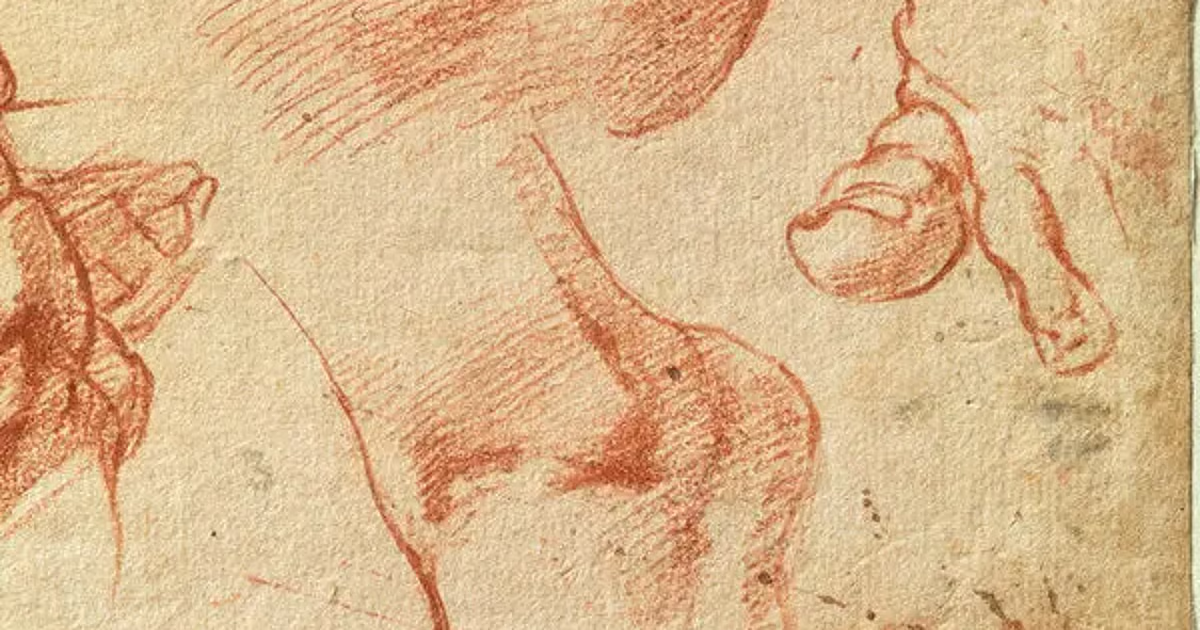

According to Christie’s, this newly identified study is the first unregistered drawing for the Sistine Chapel ceiling to come up for auction and one of approximately ten drawings by Michelangelo that remain in private hands.
Of the artist’s approximately 600 drawings that survive, only about 50 relate to the Sistine Chapel.
The work will be presented at Christie’s Old Master Drawings auction in New York on February 5, 2026, with an estimate of between 1.5 and two million dollars.
Before that, it will be on public display in the auctioneer’s galleries in New York, in February, and at its London headquarters, between November 27th and December 2nd, 2025.
The discovery occurred when the owner, residing on the west coast of the United States, sent photographs of the drawing inherited from his grandmother.
Giada Damen traveled to examine it, then took it to New York and began six months of investigation, which included infrared reflectography that revealed drawings on the back of the sheet.
These drawings, which were not visible because the sheet was glued to another support, turned out to be compatible with works by a 16th century Italian artist close to Michelangelo.
Later, Giada Damen identified similarities with a drawing from the Metropolitan Museum of Art and verified that an existing copy in the Uffizi galleries included the same study of the foot.
Direct comparison with the Metropolitan Museum drawing confirmed that both studies were executed by the same hand at the same time.
The work also features an inscription in brown paint – “Michelangelo Bona Roti” – the same as the one present in several of the artist’s drawings, allowing us to trace its passage from Michelangelo’s circle in the 16th century to an Italian collection from the 17th century.
In the 18th century, it joined the collection of Armand Louis de Mestral de Saint-Saphorin and was subsequently passed on to the current owner.
Giada Damen stated that this discovery was “a unique opportunity” and thanked the owner and the international experts consulted, who unanimously confirmed the attribution to Michelangelo.