

They are about to be fulfilled four years of Russian invasionand in Ukraine Right now it is being fought on two very different combat fronts: the one waged by soldiers from the trenches – using drones, rifles and artillery – and the war against the darkness and cold that millions of civilians are waging in the cities furthest from the battlefield.
Putin has expanded his full-scale war against the civilian population, leaving without electricity or heating entire citiesand it has done so in the middle of the most extreme winter in decades, with temperatures falling below 20 degrees below zero in Ukraine.
He energy siege It is not a new tactic for Russia. However, the systematic bombings that have been carried out since January – without letting up for a single day – against these critical infrastructures have put the country on the ropes.
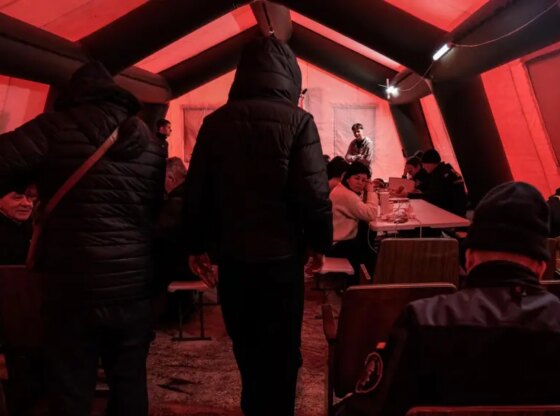
Interior of one of the hundreds of thermal shelters – invincibility points – installed by the authorities in kyiv.
With such a pace of attacks, there is no time to repair the damage, which is accumulating. It is these moments, Ukraine is less than 50% of its electricity production capacityand scheduled blackouts so as not to overload the battered system are lasting longer and longer.
In cities like kyiv – one of the most attacked – most homes have no more than three or four hours of light a day. And thousands of homes have been without heating for several weeks, with temperatures inside the rooms that are close to zero degrees.
36 hour shifts
“I also come home from work and I don’t have electricity at home; I get up to go to work and I don’t have any either. But I don’t give up, I work all day to restore the supply“, acknowledges Taras, the head of a team of transformer and distribution substation operators from the DTEK company. They are what try to repair the irreparable, so that cities do not collapse in the face of a total blackout.
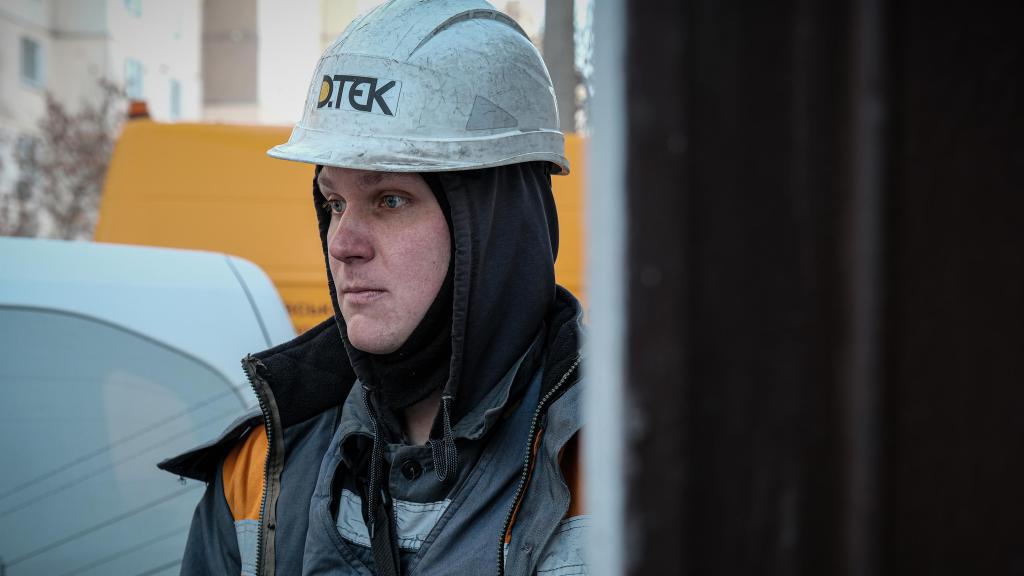
Taras, team leader of transformer and distribution substation operators at the DTEK company.
“Right now we don’t have a fixed schedule: we can work 12 or 14 hours in a row, I I have managed to do day and a half shifts without stopping“, he says while repairing a substation in the center of kyiv – at 17 degrees below zero – that has caught fire due to an overload.
“The network is not prepared to operate in these conditions,” says the DTEK engineer. Last week, another electrical worker died from electrocution at a station like the one Taras’ team is repairing. And everyone admits that they are exhausted.
But despite the fatigue, the work accidents they are suffering from working among the ice – and sometimes under fire – this other Ukrainian army does not stop. Perhaps that is why the Kremlin has made them a new target, bombing DTEK buses with workers who go to their workplaces.
State of emergency
More than 600,000 people fled the Ukrainian capital in January alone, one million homes remain disconnected from the electricity gridand tens of thousands survive with heat cuts and running water.
The situation is so critical that a state of emergency has been declared. And although the authorities have opened hundreds of thermal shelters – called invincibility points – with stations to charge the mobile phones and hot foodNot everyone has one nearby.
In these points of invincibility, powered by gasoline generators, dozens of residents gather day and night. In fact, the Zelensky Government has relaxed the curfew – which prohibits kyiv residents from going outside after midnight – so that they can seek refuge from the cold inside their houses.
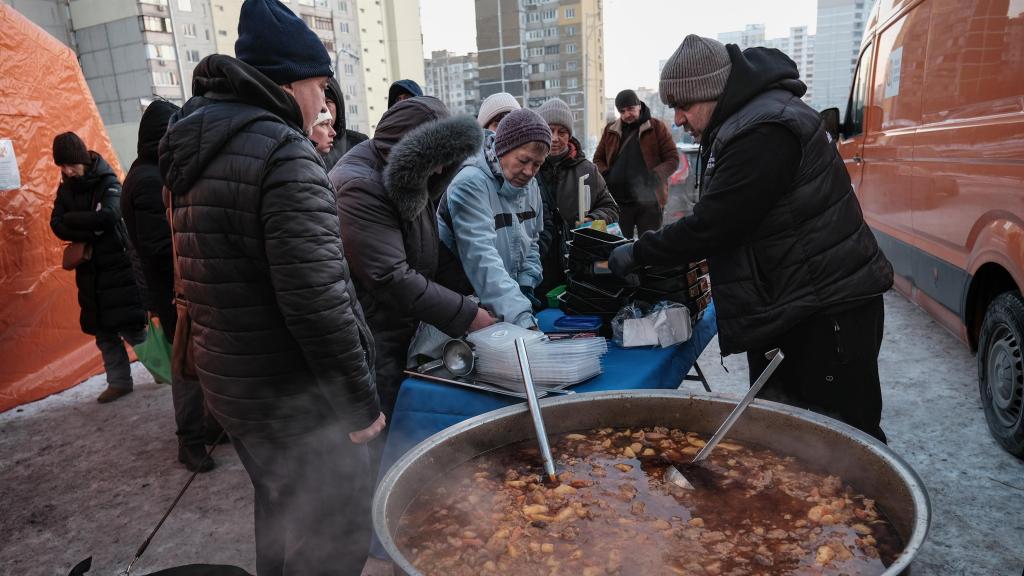
The NGO World Central Kitchen distributes hot borsch to the civilian population that goes to the thermal shelters installed in kyiv.
But with each new massive bombing against the heating and electricity plants that are still standing, the situation becomes more unsustainable. And these thermal shelters are not enough for everyone.
Four years of bombings
Systematic bombing of Ukraine’s critical infrastructure began in fall 2022, when the Kremlin implemented a wave of attacks on power plants –in cities like Kharkiv– that caused the first widespread blackouts in the country.
Then, in the spring of 2024, the attack against these production plants was so intense that they left almost 60% of the network out of service, putting the entire European Union on alert to the risk that the country would be de-energized and the four nuclear power plants that are connected to the Ukrainian electricity supply – including the one in Zaporizhiaalthough it is occupied by Russia.

But 2025 was the most devastating year. The increase in Russian bombings against Ukrainian cities was terrifying: Putin launched more than 100,000 suicide drones, 60,000 aerial bombs and 2,400 missiles.
The air raid sirens sounded more than 19,000 times due to the attacks, making it impossible to live or work normally, even in the cities furthest from the combat front. They registered attacks that lasted 12 and even 24 hours continuously. And the electrical infrastructure – again – was among the targets of those bombs.
War crime
In 2026, Putin has proposed finishing off Ukraine’s energy network. As he has done so many times throughout these four years of invasion, when he cannot advance on the combat front, attacks civilian targets in the cities to destabilize the country.
It is a war crime. Without possible justification, since the troops fighting on the front are not connected to this energy network – obviously there are no plugs in the trees, and in the trenches there are no community radiators.
However cities like Odessa, Kharkiv, Dnipro and – above all – the capital Kiev They are being dismantled little by little, by daily bombing. And without the international community even raising its voice.
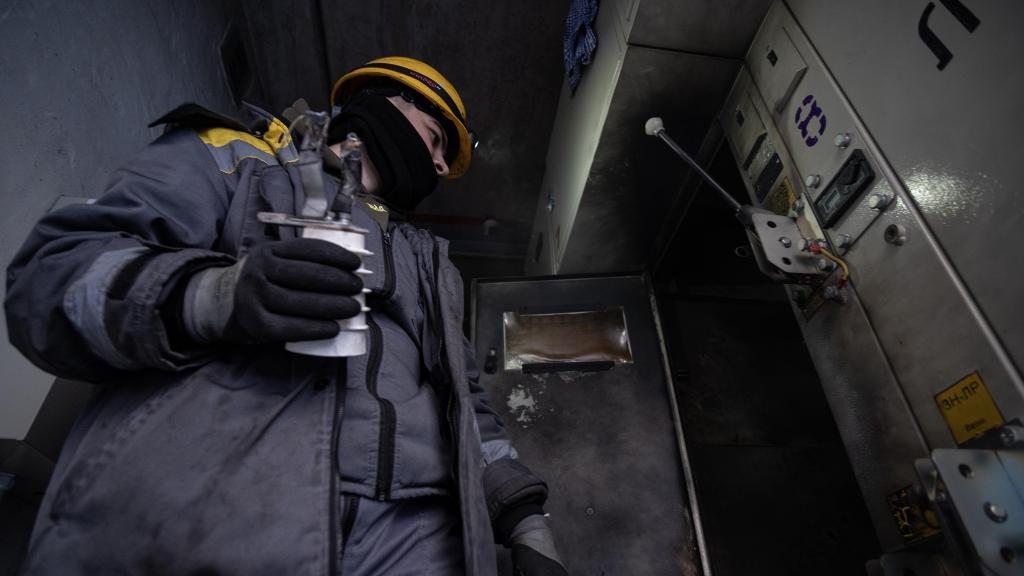
An electrical worker repairs a substation in the center of kyiv, in the middle of a cold wave and bombings.
“The situation has gotten much worse this year, There are more emergency requests than ever“, clarifies one of the operators of the Taras team, while trying to repair some parts that have melted in the electrical substation.
“Some have their supply restored immediately, while others have to wait much longer. But someone should talk to the citizens, explain the situation well, because the boys are working non-stop and they do everything they can,” adds Taras, after assisting a neighbor who has come to ask them when the power will return to their house.
You can’t repair everything
Last year, the Ukrainian Ministry of Energy revealed that more than 63,000 energy infrastructure facilities had been attacked for Russia. The nuclear power plants – which Putin has not dared to bomb so far – prevent the country from completely shutting down.
“The destruction is accumulating”explain the workers. Entire plants have been reduced to rubble, and many of them will have to be built from scratch. Something that is not possible until there is a ceasefire. So for the moment, operators like Taras and his team put “patches” on the network.
“It is very cold and it is not easy to repair the network In these conditions, added to this are the aerial alarms, during which we cannot work. But we have to continue,” Taras adds before saying goodbye in kyiv, on one of the coldest days of winter.
Cold as a weapon of war
Meanwhile, at the diplomatic level, the three-way negotiations promoted by Trump – between Ukraine, Russia and the United States – continue. And the pressure is increasing on the Zelensky government due to this unprecedented energy crisis, which has millions of Ukrainians plunged into darkness and cold. Right where Putin wanted them.
They are one more piece of the game board, where Russia is using the cold as a weapon of war. However, and although it may seem difficult to believe, the population of Ukraine is resisting in a stoic way through a meme.
Social networks have been filled with videos that humorously show how Ukrainians have adapted to living entire days without light or heating. It is their form of passive resistance, of showing Russia that they are not going to bow down and they are not going to demand that the Government sign a capitulation.
They are the resistance. Workers wearing hard hats while repairing power stations, and Ukrainians filming themselves wrapped in blankets and heating the food with candles while they wait for the light to return.
All of them have proposed to overcome what is being “the hardest winter of their lives”, although inside they wonder with uncertainty what the fifth year of war that is about to begin will have in store for them.