
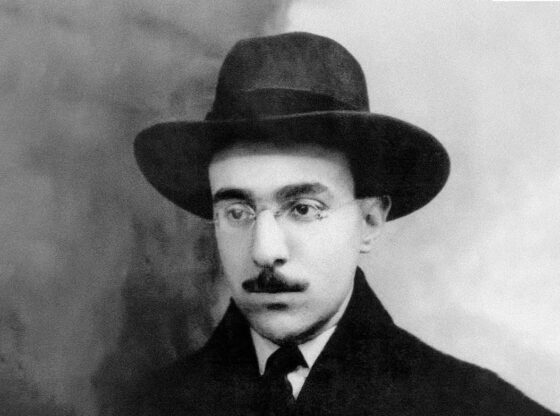

It is not just the Portuguese poet who believes that the Iberian Peninsula owes a lot to Arab civilization. This was an opinion that gained importance, he explains, “because it is an idea that, especially from the 1970s Generation onwards – in which Pessoa began to “drink” a lot – and with the emergence of the Portuguese Renaissance and Modernism – without forgetting romantic echoes in these phases – circulated, in the end-of-century and republican period, until the Estado Novo, which returned to a strongly cross-nationalist narrative. ”It is no coincidence that Pessoa denies that Iberian society descends specifically from Latin culture and considers that it is a cross between Roman and Arabic and that this reality remains until his time. For Fabrizio Boscaglia, “Iberian culture is the dynamic product of several heritages, including Greek, Latin, Jewish, Christian, Islamic and others”, however “Pessoa was clearly aware of this when he wrote that “the Arab soul is the depth of the Portuguese soul”.
For the researcher, this collection of texts on the influence of Arab culture does not show that the poet is too conciliatory when he states that “tolerance and religious pluralism in al-Andalus allowed long periods of peaceful coexistence between Jews, Christians and Muslims”. Boscaglia points to historical facts that Pessoa reflected on and considers that, “without trivializing or romanticizing the issue, the freedom of worship established by Muslims in the Middle Ages – between ups and downs – is a culturally very striking, significant and turning point in Mediterranean, Iberian and Eurasian history. Pessoa noticed this with some enthusiasm and reflected on factual elements of a history of the world in which, even in a sometimes challenging complexity, synthetic, tolerant and spiritual forces exist in the various cultures, of which he feels himself a custodian and a vate”.
Among Pessoa’s most controversial excerpts, it can be said that there is one about the Discoveries promoted by D. Henrique and which, he states, are largely due to “the Arab interference that guided the Infante’s soul”. The person responsible for editing agrees: “The fact that medieval Muslim scientists developed science and techniques that had a decisive influence on the era of the great Iberian and Portuguese navigations has already been widely studied. Among others, we can mention the Portuguese historian António Dias Farinha and the researcher Eva-Maria Von Kemnitz. Tools like the astrolabe, for example, were perfected by Muslim scientists, including women.”
Less controversial is Fernando Pessoa’s opinion on Iberism, as Boscaglia explains: “People tended not to want to unite Spain and Portugal. They wanted a confederation, based on a common psycho-cultural substrate among the Iberian nations. Substrate in which the legacy of al-Andalus is a dynamic, identity and culturally significant element.”