

The keys
nuevo
Generated with AI
nuevo
Generated with AI
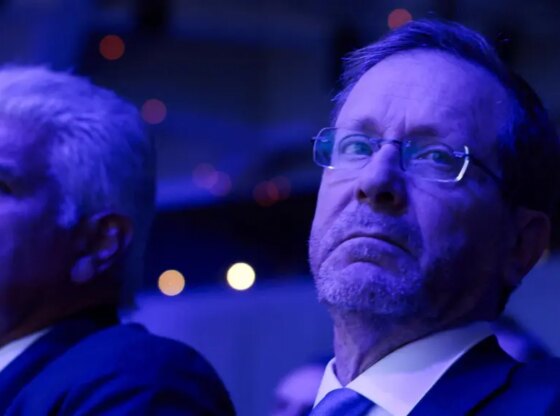
Cree Donald Trump that the Israeli president Isaac Herzog “he should be ashamed of himself” for not granting the pardon to Benjamin Netanyahuinvolved in three separate court cases for fraud, bribery and breach of trust.
It is not the first time that the tenant of the White House pressures the head of the Hebrew State to clear the gloomy judicial horizon of his friend Bibi. It is something he has been doing on a recurring basis since June of last year.
He did so in October from the Knesset rostrum, when he announced the end of the war in Gaza and presented his post-war plan in the Palestinian enclave, which remains stagnant due to Hamas’s refusal to hand over its weapons while Israeli troops occupy the Strip.
And he also did it in December, when he revealed after holding a meeting with Herzog that he had told him that the measure of grace for the Likud leader “was on the way.” An announcement that Herzog himself was quick to deny.
Israeli President Isaac Herzog at the Davos Forum.
Reuters
Trump knows that Netanyahu’s permanence in power facilitates his agenda in the Middle East. On this occasion, however, the US president’s statements take on a different tone. He had never rebuked Herzog in such a way.
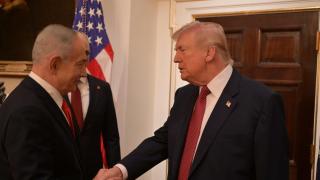
His words represent a significant escalation, and are not coincidental. He spoke them a day after receiving Netanyahu in the Oval Office, with whom he shared impressions about the ongoing negotiations with Iran – a shared enemy – and the “second phase” of the ceasefire in Gaza.
Trump did not spare his praise for Netanyahu, whom he considers “a very good prime minister in times of war.” Although he acknowledged his part of guilt in the Hamas attacks of October 7, 2023, when asked by the press.
“I guess everyone is responsible,” he admitted, before excusing him: ““No one would have seen it coming if they had been in his position.”
It was later, however, that he took issue with Herzog. “The main power he has is to grant pardons, and he is not doing it. He has said that he is granting it five different times, he does not want to do it because, I suppose, he would lose his power,” the White House tenant slipped. “I think the people of Israel should really shame him. He is a disgrace for not granting it.”
The office of the president of Israel reacted through a statement in which it reiterated that the former Labor leader would not make a decision until the Ministry of Justice, in charge of studying the viability of the pardon, makes a ruling.
“Only when that process is completed will President Herzog consider the request in accordance with the law, the interests of the State of Israel, guided by his conscience and without any influence from internal or external pressures,” the note concludes.
With his promise to handle the pardon issue “in the most correct and precise way”, Herzog bowed to Trump’s pressure. “I will only consider the good of the country and Israeli society,” declared the Israeli president in December, after acknowledging receipt of a letter signed by the Republican in which he formally requested a pardon.
From Joint Air Force Base Andrews in Maryland, Netanyahu celebrated his “close, genuine and open” relationship with Trump this Friday, but avoided mentioning his pressure to be granted a pardon.
Instead, the Israeli prime minister was skeptical “about the possibility of reaching any agreement with Iran” and stressed that any negotiations with Tehran had to “include the components that are important for us, for Israel, and in my opinion also for the entire international community: not only the nuclear issue, but also ballistic missiles and Iran’s regional allies.”